

According to the different calcium carbonate production methods, calcium carbonate can be divided into heavy calcium carbonate, light calcium carbonate, colloidal calcium carbonate and crystalline calcium carbonate. According to the size of the average particle size (d) of calcium carbonate powder, calcium carbonate can be divided into microparticle calcium carbonate (d>5μm), micronized calcium carbonate (1-5μm), fine calcium carbonate (0.1-1μm), ultrafine calcium carbonate (0.02-0.1μm) and ultrafine calcium carbonate (d≤0.02μm). According to whether the arrangement of the atoms and ions that make up calcium carbonate is regular, calcium carbonate can be divided into crystalline calcium carbonate and amorphous calcium carbonate. In addition, there are nano calcium carbonate and so on.
Heavy calcium carbonate
Heavy calcium carbonate (commonly known as heavy calcium) is prepared by directly crushing natural calcite, limestone, chalk, shells, etc. by mechanical methods (with Raymond mill or other high-pressure mills).
Light calcium carbonate
Light calcium carbonate (commonly known as light calcium), also known as precipitated calcium carbonate, is calcined from limestone and other raw materials to produce lime (the main component is calcium oxide) and carbon dioxide, and then added water to digest lime to produce lime milk (the main component is calcium hydroxide), and then carbon dioxide carbonized lime milk is introduced to generate calcium carbonate precipitation, and finally prepared by dehydration, drying and crushing. Or it can be prepared by metathesis reaction with sodium carbonate and calcium chloride to generate calcium carbonate precipitate, and then dehydrated, dried and crushed.
Colloidal calcium carbonate
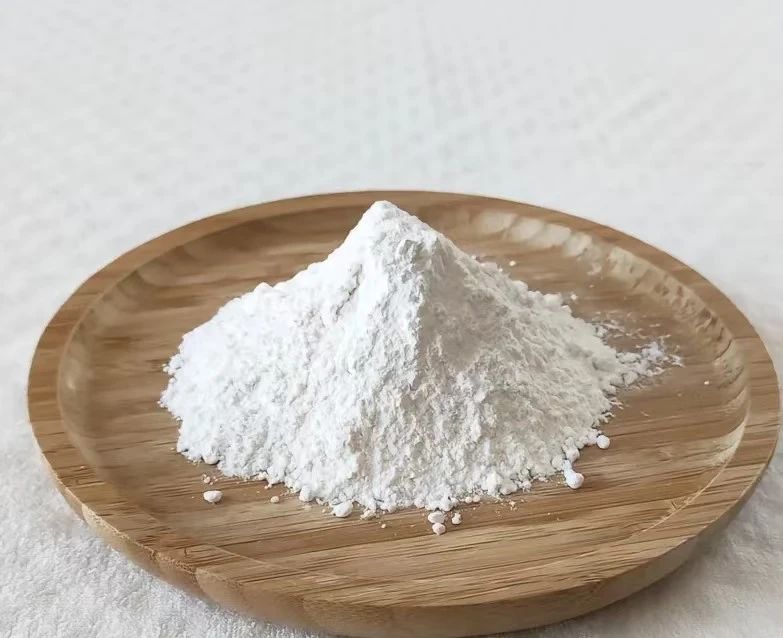
Colloidal calcium carbonate, also known as activated calcium carbonate, modified calcium carbonate, surface treated calcium carbonate, colloidal calcium carbonate or white yanhua, referred to as active calcium, is prepared by surface modification of light calcium carbonate or heavy calcium calcium carbonate with surface modifiers. Because the calcium carbonate modified by the surface modifier generally has a reinforcing effect, that is, the so-called "active", it is customary to call the modified calcium carbonate as active calcium carbonate.
Properties: Colloidal calcium carbonate is a very fine white powder, odorless, tasteless, particles similar to a sphere, particle size below 0.1um, because the surface of the particles adsorbed a layer of fatty soap, so it has colloidal activation performance is an excellent white reinforcing filler. Soluble in water, it decomposes when exposed to acid, turns charred black when burned, releases carbon dioxide and generates calcium oxide. The specific gravity is 1.99~2.01.
Crystalline calcium carbonate
Calcium hydroxide is reacted with hydrochloric acid to generate calcium chloride, which is decolorized and impurities removed by activated carbon, so that calcium chloride is carbonated with carbon dioxide in the presence of ammonia to obtain calcium carbonate, and then crystallized, separated, washed, dehydrated, dried, and screened.
Properties: pure white, hexagonal crystalline powder. The specific volume is 1.2~1.4 ml/g. Soluble in acids, almost insoluble in water.
Uses: used in toothpaste, medicine, etc., can also be used as thermal insulation materials and other chemical raw materials.
Nano calcium carbonate
Nano calcium carbonate (ultrafine calcium carbonate) has a particle size between 1-100nm, which is a newly developed powder material in the 80s of the 20th century. It is an excellent inorganic filler. It can be used in plastics with good affinity with resin, which can effectively increase or adjust the rigidity, toughness and bending strength of materials, and can improve the rheological properties of plastic processing systems, reduce plasticization temperature, and improve the dimensional stability, heat resistance and surface smoothness of products; In NR, BR, SBR and other rubber systems, it is easy to mix, evenly dispersed, and can make the rubber soft, and can also improve the extrusion processing performance and model fluidity. The rubber products have the characteristics of smooth surface, large elongation, high tensile strength, small permanent deformation, good bending resistance and high tear resistance. Compared with ordinary calcium carbonate, nano-calcium carbonate has a special crystal structure, surface electronic structure, and excellent quantum size effect and surface effect, and is widely used in chemical, catalytic, optical, magnetic, and electrical fields. However, nano-calcium carbonate is easy to agglomerate, and the surface is hydrophilic and oleophobic, which limits its application in organisms.


