

Hey there! As a supplier of Brominated Polystyrene, I've been getting a lot of questions lately about the dielectric properties of Brominated Polystyrene - filled composites. So, I thought I'd write this blog to share some insights and clear up any confusion.
First off, let's talk a bit about what Brominated Polystyrene is. It's a really useful flame retardant. You can find more info about it on our site here: Brominated Polystyrene. It's widely used in various industries because of its excellent flame - retardant performance. But today, we're going to focus on its dielectric properties when it's used to fill composites.
Dielectric Basics
Before we dive into the dielectric properties of Brominated Polystyrene - filled composites, let's quickly go over what dielectric properties are. Dielectric materials are insulators that can be polarized by an applied electric field. When an electric field is applied to a dielectric, the charges within the material are displaced slightly, creating an electric dipole moment. This polarization affects how the material behaves in an electrical circuit.
The two main dielectric properties we usually look at are the dielectric constant (also called relative permittivity) and the dielectric loss factor. The dielectric constant measures how much the material can store electrical energy in an electric field compared to a vacuum. A higher dielectric constant means the material can store more electrical energy. The dielectric loss factor, on the other hand, measures how much of the electrical energy is lost as heat when the material is subjected to an alternating electric field.
Dielectric Properties of Brominated Polystyrene - Filled Composites
Now, let's get into the nitty - gritty of the dielectric properties of Brominated Polystyrene - filled composites. The dielectric constant of these composites depends on several factors, such as the amount of Brominated Polystyrene filler, the type of matrix material, and the frequency of the applied electric field.
Generally, as the amount of Brominated Polystyrene filler increases, the dielectric constant of the composite also tends to increase. This is because the Brominated Polystyrene particles can act as additional polarization centers within the composite. When an electric field is applied, the charges within the Brominated Polystyrene particles can be displaced, contributing to the overall polarization of the material.
However, the relationship between the filler content and the dielectric constant isn't always linear. At high filler loadings, the particles may start to agglomerate, which can disrupt the uniform distribution of the filler within the matrix. This agglomeration can lead to a non - uniform polarization and may cause the dielectric constant to deviate from the expected trend.
The type of matrix material also plays a crucial role. Different polymers have different dielectric properties on their own. For example, if the matrix is a polar polymer, it will have a higher dielectric constant compared to a non - polar polymer. When Brominated Polystyrene is added to a polar matrix, the overall dielectric constant of the composite will be influenced by both the polar nature of the matrix and the polarization of the Brominated Polystyrene filler.
Another important factor is the frequency of the applied electric field. At low frequencies, the polarization of the Brominated Polystyrene - filled composite can follow the changes in the electric field relatively easily. As a result, the dielectric constant is relatively high. However, as the frequency increases, the polarization of the material may not be able to keep up with the rapid changes in the electric field. This leads to a decrease in the dielectric constant at high frequencies.
The dielectric loss factor of Brominated Polystyrene - filled composites also depends on similar factors. At low frequencies, the dielectric loss is usually low because the charges within the material have enough time to respond to the electric field without significant energy loss. But as the frequency increases, the charges may start to oscillate more rapidly, and there is more friction between the charges and the surrounding molecules. This friction causes energy to be dissipated as heat, resulting in an increase in the dielectric loss factor.
Comparison with Other Flame Retardants
It's also interesting to compare the dielectric properties of Brominated Polystyrene - filled composites with those of composites filled with other flame retardants. For example, let's take a look at Methyl Octabromoether and Brominated Styrene - butadiene - styrene Block Copolymer.
Methyl Octabromoether is another commonly used flame retardant. Composites filled with Methyl Octabromoether may have different dielectric properties compared to Brominated Polystyrene - filled composites. The molecular structure of Methyl Octabromoether is different from that of Brominated Polystyrene, which means it may have different polarization characteristics. In some cases, Methyl Octabromoether - filled composites may have a lower dielectric constant, especially at high frequencies.
Brominated Styrene - butadiene - styrene Block Copolymer is also used as a flame retardant. The block copolymer structure gives it unique properties. When used as a filler in composites, it can interact with the matrix material in a different way compared to Brominated Polystyrene. This can lead to differences in the dielectric constant and dielectric loss factor of the composites.
Applications Based on Dielectric Properties
The dielectric properties of Brominated Polystyrene - filled composites have important implications for their applications. In the electrical and electronics industry, these composites can be used in applications where specific dielectric properties are required.

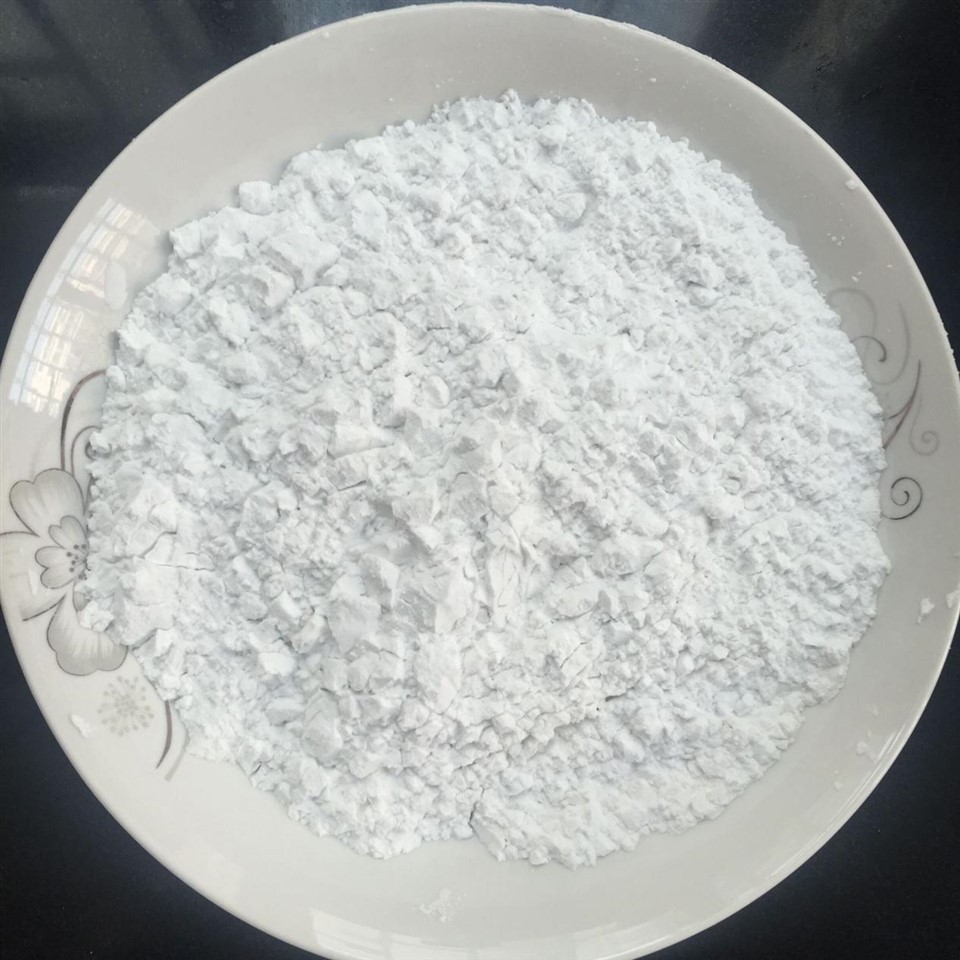
For example, in printed circuit boards (PCBs), a material with a stable dielectric constant and low dielectric loss is essential. PCBs need to transmit electrical signals accurately without significant signal loss. Brominated Polystyrene - filled composites with the right dielectric properties can be used to make the insulating layers of PCBs, ensuring reliable electrical performance.
In the telecommunications industry, dielectric materials are used in antennas and waveguides. The dielectric constant of the material affects the propagation of electromagnetic waves. By carefully controlling the dielectric properties of Brominated Polystyrene - filled composites, we can design materials that are suitable for specific telecommunications applications.
Contact Us for Procurement
If you're interested in using Brominated Polystyrene for your composite applications and want to learn more about its dielectric properties or other aspects, we'd love to hear from you. Whether you're in the electrical, electronics, or telecommunications industry, our team of experts can help you find the right solution for your needs. We have a wide range of Brominated Polystyrene products with different properties, and we can work with you to develop custom - made composites. So, don't hesitate to reach out to us for a procurement discussion.
References
- [Book Title 1], Author 1, Publisher 1, Year 1
- [Book Title 2], Author 2, Publisher 2, Year 2
- [Journal Article 1], Author 3, Journal Name 1, Volume 1, Pages 1 - 10, Year 3