

Hey there! As a sodium chloride supplier, I've always been fascinated by the many roles this common compound plays, not just in our daily lives but also in the vast expanse of nature. One super interesting area is its role in cloud formation. So, let's dive into it and see how sodium chloride, that little white stuff we often sprinkle on our fries, is involved in the creation of those fluffy clouds we see in the sky.
Introduction to Cloud Formation Basics
Before we get into the nitty - gritty of sodium chloride's role, let's quickly go over how clouds form in the first place. Clouds are formed through a process called condensation. It all starts when water evaporates from the Earth's surface, whether it's from oceans, lakes, rivers, or even through transpiration from plants. This water vapor rises into the atmosphere. As it goes up, the temperature in the atmosphere drops. When the air cools to its dew point (the temperature at which the air becomes saturated with water vapor), the water vapor starts to condense into tiny water droplets or ice crystals. These tiny particles group together to form clouds.
The Role of Nuclei in Cloud Formation
Now here's where things get really interesting. Cloud formation doesn't just happen out of thin air – literally! It usually requires something called cloud condensation nuclei (CCN). These are tiny particles in the atmosphere around which water vapor can condense more easily. Think of them as the "seeds" for cloud formation.
Sodium chloride is one of the most common types of CCN. It's everywhere in the atmosphere, especially over the oceans. Oceans cover about 70% of the Earth's surface, and they're full of sodium chloride (that's what makes the seawater salty). When waves crash and break at the ocean surface, they create tiny droplets of seawater. As these droplets evaporate, they leave behind tiny particles of sodium chloride, which then get carried up into the atmosphere by wind.
How Sodium Chloride Facilitates Condensation
Sodium chloride is a hygroscopic substance, which means it has a strong affinity for water. It can attract water molecules from the surrounding atmosphere. When water vapor in the air comes into contact with a sodium chloride particle in the atmosphere, the sodium chloride "pulls" the water molecules towards it. This makes it much easier for the water vapor to transition from a gaseous state to a liquid state.
In other words, sodium chloride acts as a catalyst for the condensation process. Without these nuclei, the water vapor would have to reach a much higher level of supersaturation (a state where the air holds more water vapor than it theoretically should) before it could start condensing on its own, which doesn't happen very often. So, sodium chloride particles help kick - start the cloud formation process at much lower levels of supersaturation.

Impact on Cloud Properties
The presence of sodium chloride in cloud formation also has an impact on the properties of the clouds themselves. Clouds formed with sodium chloride as CCN tend to have a higher number of smaller cloud droplets. This affects how the clouds interact with sunlight. Smaller droplets are more efficient at scattering sunlight. So, clouds with a lot of sodium chloride - derived CCN can reflect more sunlight back into space, which can have a cooling effect on the Earth's climate.
On the other hand, these smaller droplets also make it harder for the clouds to produce precipitation. For rain to form, cloud droplets need to grow large enough to fall under the force of gravity. In clouds with many small sodium - chloride - based droplets, it's more difficult for the droplets to combine and grow to a precipitation - sized drop. So, the presence of sodium chloride can influence both the albedo (reflectivity) of clouds and their precipitation - forming ability.
Comparison with Other Chloride Compounds
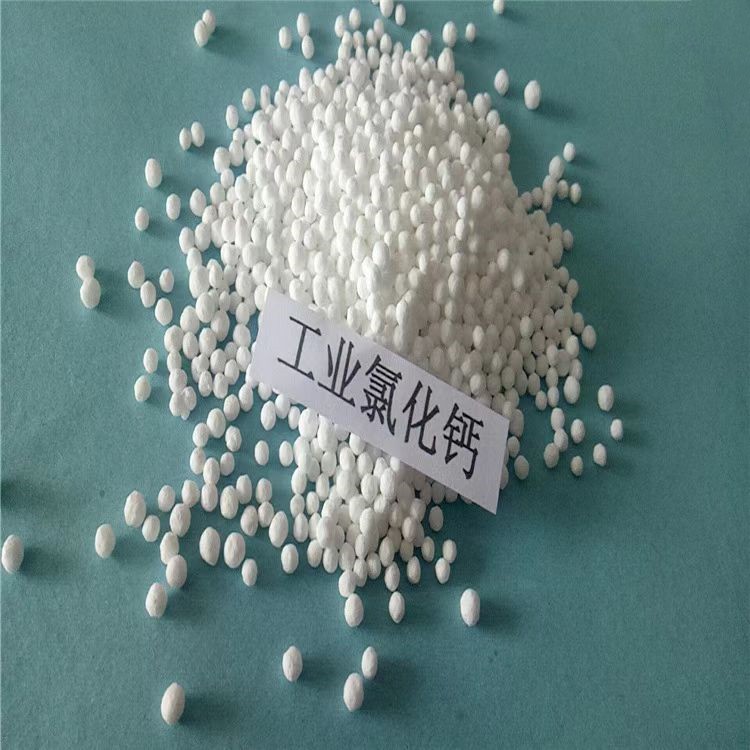
While sodium chloride is a major player in cloud formation, there are other chloride compounds that can also act as CCN. For example, Calcium Chloride Dihydrate Powder and Calcium Chloride Prills are also hygroscopic substances and can attract water vapor in the atmosphere. Similar to sodium chloride, they can act as nuclei for cloud condensation.
Potassium Chloride is another chloride compound that can potentially play a role in cloud formation. However, compared to sodium chloride, these compounds are generally less abundant in the atmosphere, especially over the oceans. But in certain regions where there are industrial emissions or natural sources rich in these compounds, they can contribute to cloud formation.
Our Role as a Sodium Chloride Supplier
As a sodium chloride supplier, we understand the importance of providing high - quality sodium chloride, not just for industrial uses but also for its role in the natural world. Our sodium chloride products are carefully processed to ensure purity. This purity is crucial because any impurities in the sodium chloride could potentially affect its ability to act as an effective CCN.
We also work towards sustainable sourcing methods. Since the ocean is a major source of sodium chloride, we make sure that our extraction and production processes don't harm the marine ecosystem. We believe in responsible business practices that balance the needs of industry and the environment.
Contact Us for Your Sodium Chloride Needs
If you're in the market for sodium chloride for various applications, whether it's for industrial use or you're involved in meteorological research where the purity of sodium chloride matters for simulating cloud - forming processes, we're here to help. We have a wide range of sodium chloride products to meet your diverse requirements.
Don't hesitate to reach out and start a conversation about your specific needs. We're always eager to discuss how our sodium chloride can fit into your projects. Whether you need a small quantity for a research experiment or a large - scale supply for an industry, we have the capacity and expertise to serve you.
References
- Seinfeld, J. H., & Pandis, S. N. (2006). Atmospheric Chemistry and Physics: From Air Pollution to Climate Change. Wiley.
- Pruppacher, H. R., & Klett, J. D. (1997). Microphysics of Clouds and Precipitation (2nd ed.). Kluwer Academic Publishers.
- IPCC (2013). Climate Change 2013: The Physical Science Basis. Contribution of Working Group I to the Fifth Assessment Report of the Intergovernmental Panel on Climate Change. Cambridge University Press.