

Hey there! As a sodium chloride supplier, I've been asked a ton about how sodium chloride affects the stability of emulsions. So, I thought I'd sit down and share what I've learned over the years.
First off, let's quickly talk about what emulsions are. An emulsion is basically a mixture of two immiscible liquids, like oil and water. One liquid is dispersed in the other in the form of tiny droplets. Think of milk, which is an emulsion of fat in water. Emulsions are used in a whole bunch of industries, from food and cosmetics to pharmaceuticals and oil recovery.
Now, let's get to the main topic: how sodium chloride comes into play. Sodium chloride, or good old table salt, can have a pretty significant impact on emulsion stability.
1. Effect on Interfacial Tension
Interfacial tension is the force that exists at the boundary between two immiscible liquids. When you add sodium chloride to an emulsion, it can change this interfacial tension. In some cases, sodium chloride can reduce the interfacial tension between the oil and water phases. This is because the ions in sodium chloride can interact with the molecules at the interface.
When the interfacial tension is reduced, the droplets in the emulsion become more stable. They're less likely to coalesce (merge together) because the energy required for them to come together and form larger droplets is higher. However, this isn't always the case. Sometimes, adding too much sodium chloride can actually increase the interfacial tension, making the emulsion less stable.

2. Impact on Electrical Double Layer
Many emulsions are stabilized by an electrical double layer around the droplets. This double layer creates a repulsive force between the droplets, preventing them from coming too close and coalescing.
Sodium chloride can disrupt this electrical double layer. The ions in sodium chloride can neutralize the charges on the droplets, reducing the repulsive force. As a result, the droplets are more likely to come together and form larger droplets, which can lead to phase separation and a less stable emulsion.
But here's the thing: the effect of sodium chloride on the electrical double layer depends on the concentration. At low concentrations, the disruption might be minimal, and the emulsion can still remain stable. However, as the concentration of sodium chloride increases, the disruption becomes more significant, and the emulsion's stability can be severely compromised.
3. Influence on Viscosity
The viscosity of an emulsion can also affect its stability. A more viscous emulsion is generally more stable because the droplets move more slowly and are less likely to collide and coalesce.
Sodium chloride can change the viscosity of an emulsion. In some cases, it can increase the viscosity by interacting with the molecules in the continuous phase. This can make the emulsion more stable. On the other hand, in other systems, sodium chloride might have the opposite effect and decrease the viscosity, leading to a less stable emulsion.
4. Role in Salting - Out
Salting - out is a phenomenon where adding a salt to a solution causes a solute to precipitate out. In the context of emulsions, sodium chloride can cause salting - out of certain emulsifiers.
Emulsifiers are substances that help stabilize emulsions by reducing the interfacial tension and preventing droplet coalescence. If sodium chloride causes the emulsifier to precipitate out, the emulsion loses its stabilizing agent, and its stability is greatly reduced.
Practical Considerations for Different Industries
In the food industry, sodium chloride is often used as a flavor enhancer. But when it comes to emulsions in food products, like salad dressings or mayonnaise, the amount of sodium chloride added needs to be carefully controlled. Too much can lead to phase separation and a less appealing product.
In the cosmetics industry, emulsions are used in products like creams and lotions. Sodium chloride can affect the texture and stability of these products. Formulators need to find the right balance to ensure that the product remains stable and has the desired sensory properties.
In the oil and gas industry, emulsions can form during the production and transportation of crude oil. Sodium chloride in the formation water can impact the stability of these emulsions. Understanding how sodium chloride affects emulsion stability is crucial for efficient oil recovery and processing.
Related Products
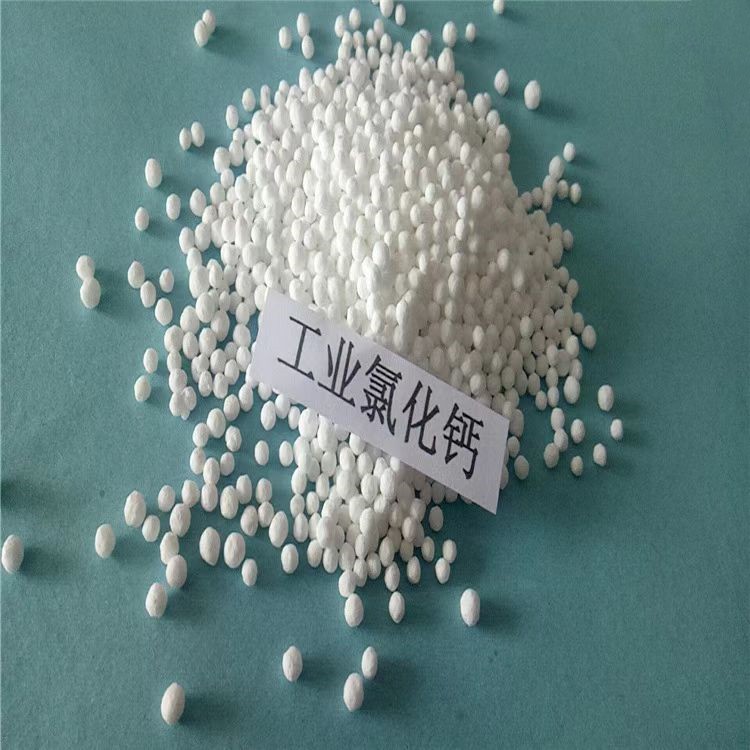
If you're interested in other chloride products, we also offer Calcium Chloride Dihydrate Powder, Calcium Chloride Dihydrate Flake, and Calcium Chloride Prills. These products have their own unique properties and applications, and they can also play a role in emulsion - related processes.
Conclusion
So, as you can see, sodium chloride can have a complex and sometimes contradictory effect on the stability of emulsions. Its impact depends on various factors, including the concentration, the type of emulsion, and the presence of other substances.
If you're working with emulsions and need sodium chloride or other chloride products, it's important to do some testing to find the optimal conditions. We're here to help you with that. Whether you're in the food, cosmetics, or oil and gas industry, we can provide high - quality sodium chloride and offer advice on how to use it effectively.
If you're interested in purchasing sodium chloride or any of our other products, or if you have any questions about how they can be used in your emulsion systems, don't hesitate to reach out. We're always happy to have a chat and discuss your specific needs.
References
- McClements, D. J. (2005). Food Emulsions: Principles, Practice, and Techniques. CRC Press.
- Becher, P. (1965). Emulsions: Theory and Practice. Reinhold Publishing Corporation.
- Hunter, R. J. (1981). Zeta Potential in Colloid Science: Principles and Applications. Academic Press.