

Hey there! As someone who's deeply involved in the Sodium Chloride business, I've seen firsthand how this common compound can have a pretty big impact on our daily lives. One of the most interesting aspects of Sodium Chloride is its effect on the freezing point of water. So, let's dive into it and see what's going on here.
The Basics of Freezing Point Depression
First off, we need to understand a little bit about freezing point depression. You see, when you add a solute (like Sodium Chloride) to a solvent (in this case, water), it lowers the freezing point of that solvent. This is a colligative property, which means it depends on the number of solute particles in the solution, not the type of solute.
When water freezes, its molecules start to arrange themselves into a regular, crystalline structure. But when you add Sodium Chloride to the water, the salt ions (sodium and chloride) get in the way of this process. They disrupt the formation of the ice crystals, making it harder for the water molecules to come together and freeze. As a result, you need to lower the temperature even further than normal for the water to freeze.
How Sodium Chloride Works
Sodium Chloride, or table salt, is made up of sodium ions (Na⁺) and chloride ions (Cl⁻). When you dissolve it in water, these ions separate and spread out throughout the solution. Each ion acts as a little obstacle to the water molecules trying to form ice.
Let's say you have a cup of pure water. At normal atmospheric pressure, it will freeze at 0°C (32°F). But if you add some Sodium Chloride to that water, the freezing point will drop. The more salt you add, the lower the freezing point will go.
For example, if you add about 10% Sodium Chloride by weight to water, the freezing point will drop to around -6°C (21°F). That's a pretty significant change! And this is why we use salt on roads and sidewalks in the winter. By spreading salt on the ice, we're lowering the freezing point of the water in the ice, causing it to melt.
Practical Applications
The ability of Sodium Chloride to lower the freezing point of water has some really important practical applications. One of the most obvious ones is in de-icing. As I mentioned before, we use salt to melt ice on roads, sidewalks, and parking lots during the winter. This helps to improve safety by reducing the risk of slips and falls.
But it's not just for outdoor use. Sodium Chloride is also used in refrigeration systems. In some types of refrigerators and freezers, a brine solution (a mixture of salt and water) is used to transfer heat. The lower freezing point of the brine allows it to circulate through the system without freezing, even at very low temperatures.
Another application is in the food industry. Salt is often added to food products to lower the freezing point and prevent them from freezing during storage and transportation. This is especially important for products like ice cream and frozen dinners.
Comparing with Other Salts
Sodium Chloride isn't the only salt that can lower the freezing point of water. There are other salts, like Calcium Chloride Dihydrate Flake, Calcium Chloride Powder, and Calcium Chloride Prills, that have similar effects.
Calcium chloride is actually more effective at lowering the freezing point of water than Sodium Chloride. This is because it dissociates into more ions in solution. When calcium chloride (CaCl₂) dissolves in water, it breaks up into one calcium ion (Ca²⁺) and two chloride ions (Cl⁻), for a total of three ions per formula unit. In contrast, Sodium Chloride only dissociates into two ions (Na⁺ and Cl⁻).

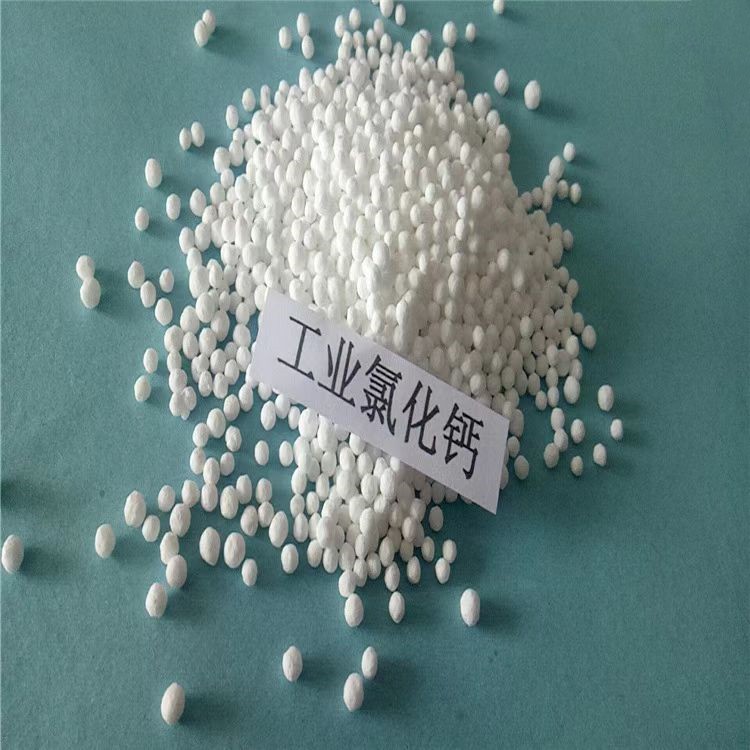
So, if you're looking for a more powerful de-icing agent, calcium chloride might be a better choice. However, it's also more expensive than Sodium Chloride, so you need to weigh the cost against the benefits.
Factors Affecting the Effectiveness
There are a few factors that can affect how well Sodium Chloride (or any other salt) lowers the freezing point of water. One of the most important factors is the concentration of the salt solution. As I mentioned earlier, the more salt you add, the lower the freezing point will go. But there's a limit to how much salt you can dissolve in water. Once you reach this saturation point, adding more salt won't have any additional effect.
The temperature also plays a role. At very low temperatures, the ability of Sodium Chloride to lower the freezing point becomes less effective. This is because the water molecules are moving so slowly that the salt ions have a harder time disrupting the formation of ice crystals.
The type of surface the salt is applied to can also make a difference. If the surface is dirty or has a lot of debris on it, the salt might not be able to come into direct contact with the ice, reducing its effectiveness.
Our Sodium Chloride Products
At our company, we offer high-quality Sodium Chloride products that are perfect for a variety of applications. Whether you need it for de-icing, refrigeration, or food processing, we've got you covered.
Our Sodium Chloride is carefully sourced and processed to ensure the highest level of purity and quality. We offer it in different grades and forms, so you can choose the one that best suits your needs.
Contact Us for Purchasing
If you're interested in purchasing our Sodium Chloride products, or if you have any questions about how it can be used to lower the freezing point of water, don't hesitate to get in touch. We're here to help you find the right solution for your needs.
References
- Atkins, P., & de Paula, J. (2014). Physical Chemistry for the Life Sciences. Oxford University Press.
- Chang, R. (2010). Chemistry. McGraw-Hill.
- Silberberg, M. S. (2013). Principles of General Chemistry. McGraw-Hill.